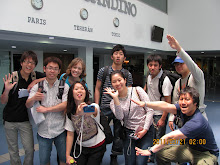

We're having an interesting time adjusting to life in our new city.
Hamamatsu happens to be a very international city with the largest
population of Brazilians in Japan. Some companies here brought over
thousands of workers and their families years ago and then layed most of
them off when the economy got bad. Sadly, this led to a mini-crime wave
and now there is MUCH prejudice against them here. I wonder what those
companies were thinking by bringing so many people from a culture that
is so incompatible with Japanese culture and expecting them to blend
easily into society here. And after laying them off, how did they expect
them to survive?
Finally, the government got fed up and paid
to repatriate any of the workers who wanted to return to Brazil. At that
time, the Brazilian school and some Brazilian churches closed down
because such a huge number of them decided to return to Brazil. However,
many have stayed and are living here still.
The saddest thing
is that the majority of the foreigners here are probably just people who
are trying to survive just like everybody else. However, there are
scars on this city left from some pretty heinous crimes, including
murder. So fear and ignorance reign and the kids and I feel odd when
people speak to us in Portuguese (this comes from the Brazilians) and
when people ask if we're from Brazil (this from the Japanese). We are in
the middle of this situation where we want to sympathize with the
foreigners (after all, we are foreign too), and yet we can understand
the fear of the Japanese. That is also exacerbated by anger at companies
that would cause such mayhem for so many people just to make (or save) a
buck.
My son was "interrogated" by a police officer at
Hamamatsu Station this week. He goes to a sports club near there to work
out after his morning job and usually drops by the station after to
hook up to the free WiFi offered there. He then chats with his friend in
the States over Facetime. Well, I guess the officer thought he was up
to no good and decided to go after him. He asked question after question
until finally my son said, "am I doing anything wrong?" The answer was
"no." So my son said, "don't judge people by the way they look!" and
walked away. He was followed, but firmly told the officer to stop
following him and leave him alone.
Today I took my son to get
his scooter license. We had all of our paperwork in order, but the
licensing officer decided he wanted to see more identification. We
already had photo ID and our family register which had been processed by
our local police department in advance of going for his licensing test.
I had to show him MY driver's license, MY insurance card, and MY alien
registration card before he would stamp my son's form.
All I
can say is, "Thank you God for showing me firsthand how it feels to be
the victim of discrimination. And give me the strength to SHOUT that it
is wrong." Amen
Friday, July 5, 2013


Wednesday, April 10, 2013
2013 Japan Service-Learning Team to Nicaragua

Wednesday, October 3, 2012
Ringing in the new^^.
Well, even if it is not the new year yet, it is time for new beginnings for me. That is because every October I get to meet my new group of students that will be taking classes with me for the next several months. This year I have a whopping 130 on my class list, though after class begins I will probably find that the number is closer to 120-something.
In any case, it's a very LARGE class and I feel a very BIG responsibility as I prepare to meet them tomorrow. We will be trying some new things this semester as I attempt to use less paper and get the students to access the university web system more.
I look forward to meeting an enthusiastic group of young people tomorrow, from whom I hope to get some new energy!
Friday, July 6, 2012
Mr. (Dr.) Kawahara: Big heart
I was wading through a pile of papers in my office today and found one piece of paper with notes written on it in my handwriting. I started reading and remembered that I had carefully saved this piece of paper because I wanted to use the notes to make a post in my blog on the topic.
Last October (2011), I was privileged to have Dr. Naoyuki Kawahara give a guest lecture in the Global Medicine class that I facilitate. This was the second time Dr. Kawahara had come to my class and once again I was very impressed by his heart.
Dr. Kawahara is quite famous in Japan for his work in Sudan in Africa. His NPO, Rocinantes, has been giving much needed medical care to the people of Sudan since 2005. Before starting his NPO, he worked as a doctor to the diplomats of the Japanese Ministry of Foreign Affairs in Africa. But in 2005, he gave up his job with the Ministry in order to care for the people of Sudan full time. His wife and children returned to Japan and Dr. Kawahara began the long journey down the rough road of trying to do what his heart told him was right--to care for the suffering people he saw right in front of him in Sudan.
Dr. Kawahara told the students, "Try to not think too much [when making your decision to do something]". I was reminded of the popular Nike commercial "Just do it." I knew that he was trying to make them understand how easy it is to sort of talk ourselves out of doing something when we start over-thinking things. It is, perhaps, human nature to start thinking of all of the negatives and forget the real need that is there to be filled. He also told the students, "There is a light shining among the poor and needy. In Japan, we forget to be thankful and complain about little things."
He talked to the students about the importance of learning to diagnose and treat with only a stethoscope. Of course high tech MRI and CT scans are miraculous tools, but to most of the world's population these are not available. So, learning to diagnose without modern technology is a very important skill--one that can be lost if young doctors become too dependent on technology.
Dr. Kawahara's love for the people of Sudan has not stopped him from also jumping right in to the fray here in Japan when the great Eastern Japan earthquake and Tsunami took place. In fact, he was in Tokyo when the disaster took place and went straight to a hospital where he borrowed an ambulance and drove to an area hard struck by the disaster. Since then, his NPO has had a constant presence in that area. He told the students of the need to build trust with patients, sharing smiles and activities that can help them to gradually recover emotionally. He planted sakura (cherry blossom) trees with the people there and made promises to gather under the blooming trees in 20 years time to see how they've grown.
In conclusion, I would like to say that Dr. Kawahara has a very big heart. One of the most impressive things to me the first time I heard him speak was that he showed us a photo of his wife at the end of his presentation and said "This is my lovely wife. Without her I could not do what I do." Naoyuki Kawahara is a great man in many ways, but he is also a humble man who keeps a heart full of gratitude for those supporting him.
Thank you Dr. Kawahara.
Saturday, March 10, 2012
These words are especially for everybody working toward recovery in Tohoku, with Love
So it is not how much we are doing, but how much love we put in the doing that fulfills the aim. ... Mother Teresa
たいせつなことは どれだけ たくさんのことや 偉大なことをし
たいせつなことは どれだけ たくさんのことや 偉大なことをし
Monday, February 20, 2012
New academic calendar for some universities? Wow.
Hi!
It's been a long time since I've had a chance to sit down and add something to my blog. I am finally finishing up the grades for this semester and now very busy getting ready for the March service-learning trip to Nicaragua.
This morning I was discussing the University of Tokyo's proposed plan to change their academic year to one that begins in September with some graduate students. When I first heard about the plan, I thought it would never be possible because it would take away very uniquely Japanese tradition of ending and beginning the academic year during cherry blossom season. And beyond that, there is the problem of the once a year university entrance exam in January and the very lucrative business that revolves around it (cram schools, gap-year prep schools).
Today, I read a newspaper article that claims the biggest stumbling block to the new academic year is the national medical licensing exam which takes place in mid-February each year. Now the U of T and 8 other institutions that support the change to a new academic year are proposing a second medical licensing exam to fit their new schedule. Wow! And who will be producing the 500 new test questions that will have to be created for that second exam? The multitude of professors who are already overworked, overstretched, and overstressed as they write questions for the once yearly exam? Wow. It seems like a lot to ask, considering there is only a small percentage of all medical school graduates in Japan who come from those institutions that are planning to take on the new academic calendar. In fact, the newspaper reported that a total of only 898 examinees out of a total of 7,866 last year would be in need of a newly scheduled exam. And how will they be able to match those newly licensed doctors to hospitals in a timely manner when currently all hospitals are taking their new interns in April each year.
Wow. If the change does take place, many many things will have to change. Change can be a good thing, but I'm sure it will be very difficult.
Wow.
Wow.
Wow.
I think I will miss the cherry blossoms if our academic year changes. But change happens anyway, in spite of our emotional ties to things. Change happens. Let's hope the change that happens will be for the greater good of everyone.
FT
Sunday, December 18, 2011
Christmas
It's already past the middle of December and I realized that it has been a long time since I have updated my blog. In October, the new semester started and I met my next big class of second year students who will be with me through the next year. And again, I find myself falling in love with my students--with their energy, their curiosity, their hopes to change the world. It seems that no sooner do I say goodbye to one group of students that have found their way into my heart than I am greeted by a new and energetic group of students who jump right into their place. The joys of teaching! It makes me wonder what life will be like after I retire--will I be able to go on without this never ending process of goodbyes and hellos? Only time will tell.
Christmas 2011 is fast approaching and I'm dreading the quiet Christmas morning on Dec. 25th this year. It will be the first Christmas in 19 years that has been without children in our home. In this new age of technology that brings us so much closer even when we're oceans apart (Skype, Facebook, etc.), there is still no replacement for the hugs that we shared with our kids. But there is no mistaking the Christmas spirit is still here, even without the kids. Nearly 20 students and friends gathered at my house for a Christmas party a few nights ago, so the tree and decorations went up as usual. Hubby and I will spend our Christmas Eve at church surrounded by our "church family" again this year, as usual, and Christmas day will be in church too since it falls on a Sunday this year (usually Dec. 25 is not a church day in Japan because it is not a national holiday). So, life goes on, even with a few empty spaces in my heart.
And with this, dear students, I would like to wish you all a very MERRY CHRISTMAS and a happy new year!! And I'll see in you in class on 12/22 for RAT#5! Wooohooo!
Love,
FT
Tuesday, September 27, 2011
KESENNUMA Before and After . . . and 6 months after
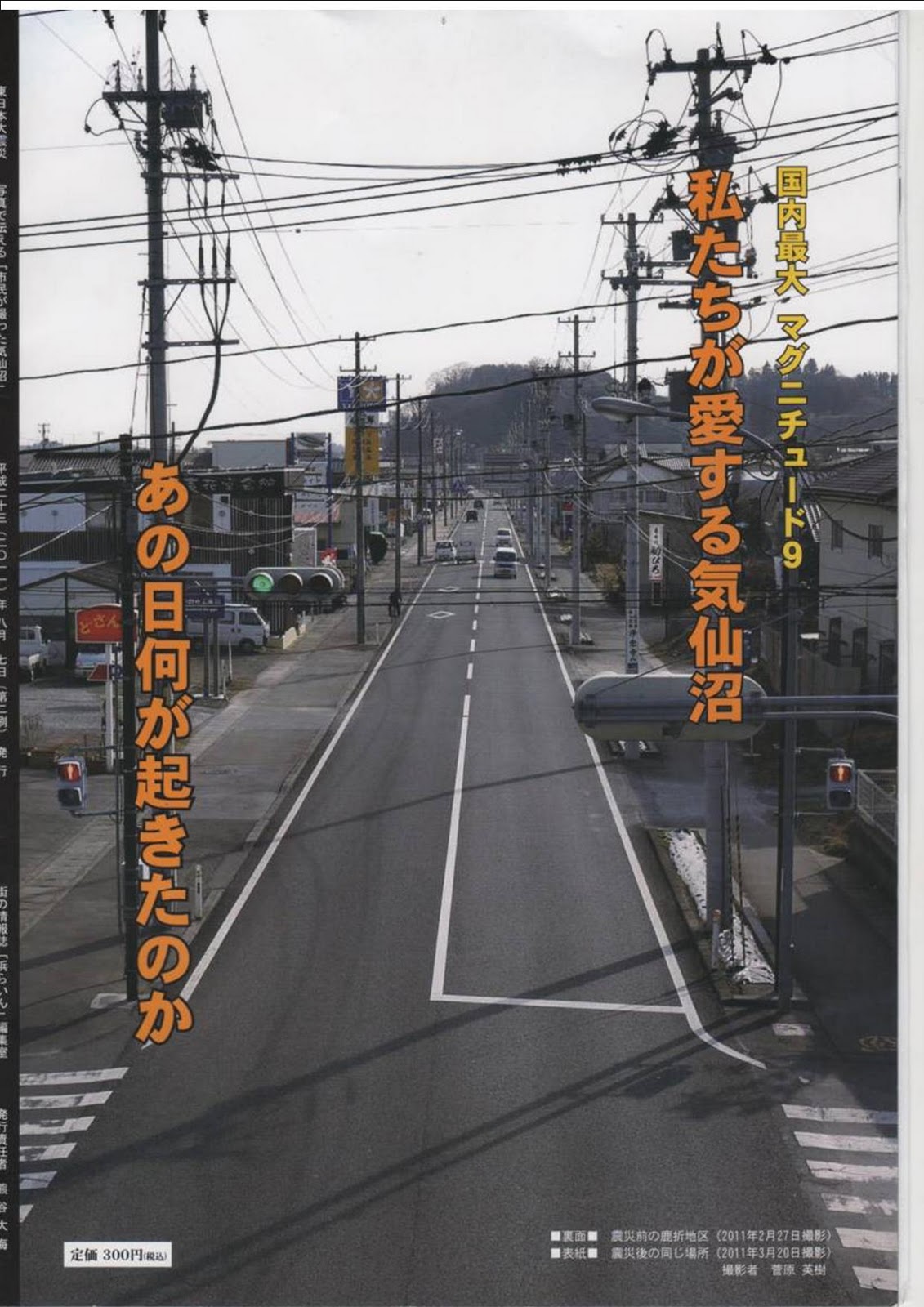 |
| Before the earthquake and tsunami. |
 | |
| After on the same street as above. |
| It is painful to see the images above, but there is recovery happening. Six months after the tsunami, the mountains of rubble on the sides of the street are now gone--cleared by faithful workers and volunteers who are bringing order, healing, and life back to the city. The work is not finished, but progress is being made. Please keep praying for Kesennuma. |
The Lost is Found
 This 81 year old woman went through a more traumatic experience than most of us could ever imagine. On the day of the earthquake and tsunami, she left her home and tried to seek safe shelter. She made her way to the third floor rooftop of a building where she watched as the tsunami pushed into the first two floors of the building she was in. The nursing home next to the building she was in was completely engulfed and all in it drowned.
As day turned to night, she watched as the sea that was filled with oil from the hundreds of cars that had been tossed like toys by the tsunami became an ocean of fire. She watched as a gas station caught fire and exploded beyond them. She spent 2 days with a handful of other survivors on top of that building before being brought to an evacuation center in a gymnasium. Her son walked the devastated area looking for her. At the evacuation center, she was in shock and couldn't ask her rescuers to help her get to her son. Finally her son found her in the evacuation center and brought her to their new home--the Hotel Boyo. The home that they had lived in was gone. After that she spent 1 month in the hospital getting blood transfusions and recovering from bleeding ulcers and PTSD caused by the stress of her terrible ordeal.
My husband and I had the honor of being with her and her family when they went for the first time to a gymnasium where volunteers had painstakingly gathered many personal items they found after the tsunami. Six months had passed and she never expected to find any traces of the items that had been washed away and burned on March 11th. But as we walked through the hundreds of small items and photos lovingly restored by volunteers, her son suddenly said "Here! Look!" As we gathered around we were all astounded to find there was her father-in-law's memorial plaque. She cried and hugged the plaque saying "You came back to me. You came back to me."
The volunteers had carefully labeled every item they found with a number, the location of where it was found, and the numbers of any other items found at the same location. The woman also found an intact photograph of her 70th birthday celebration. Lost treasures found.

Hiro the Hero and the other Boyo Boys (and girls!)
Hiro is an amazing young man who had passed through Kesennuma 3 years earlier on a bicycle tour around Japan. Hiro’s bicycle tour was not your average cross country cycling excursion. Hiro and his friends set out on “mama-chari” bicycles (not the type of bicycles intended for cross country travel—see photo) to protest global warming . ( see their adventure here→ http://greenz.jp/mamachari_toyako/ ). They rode all over Japan on their bicycles and on the day they passed through Kesennuma they met the lovely Mrs. Kato who let them stay for free at the Hotel Boyo. After sleeping outside throughout their tour, Hiro and his friends had found heaven at the Hotel Boyo where they slept in clean soft futons for the first time in weeks.
 |
| mama chari |
After meeting Mrs. Kato, Hiro kept in touch with her by exchanging New Year’s greeting cards each year. Little did they know that their next face to face meeting would be after the worst natural disaster in Japan’s recent history. When the earthquake and tsunami hit on March 11th, Hiro tried to contact Mrs. Kato, but couldn’t get a connection for days. However, Hiro did not give up and finally was able to talk to Mrs. Kato on the phone. Hiro wanted to go and help, but Mrs. Kato said “No, it is too dangerous. Stay where you are safe.” But Hiro would not take no for an answer. He went to Kesennuma and started working alongside the Katos at the Hotel Boyo which had become a makeshift evacuation site for more than 50 people who had lost their homes.
Hiro was scheduled to start a new job in Australia in April, but he contacted his employers and asked them to wait, saying “there is something I have to do.” That “something” was to stay in Kesennuma and work to help the Hotel Boyo and many others recover from the disaster. Today, more than 6 months later, Hiro is still working in Kesennuma and has welcomed countless friends and even strangers who have appeared at the Hotel Boyo to volunteer. Along with Hiro, Yusuke who has also been working faithfully in Kesennuma since he arrived one week after Hiro, Pokemon who is a university student, Ike-chan a young craftsman, and Nomaguchi-kun a medical student from Kyushu have all been working for Kesennuma. And these are just the heroes that I met, there are countless others who have left their lasting mark on the hearts of the Kato family and the community.
Less Than Zero
 |
| This was a neighborhood. After removal of the ruins, there is nothing left. |
We were welcomed like family members by Mr. and Mrs. Kato, the owners of the Hotel Boyo where we stayed. They shared their friendship and hospitality with us and gave us much more than we were able to give them through our simple volunteer efforts. The Katos are heroes who survived the disaster and also saved the lives of others as they mourned the loss of the life they once knew. They lost their family home and everything in it to the tsunami and to the fire that followed. During our stay they taught us many things about the situation now in Kesennuma.
One of the most shocking things to me was to learn that all of the people who lost their homes in the tsunami are still being forced to continue paying the loans on houses they will never see or live in again. It is understandable that the banks need to be repaid for the loans they made, however it is not within reason for them to expect these people who have lost everything—including jobs—to continue paying them. This is where we need the government of Japan to stand up and say “we will pay—we will help you to get back on your feet.” At present, there has only been a payment of 3,000,000 yen per household (approx. 39,000 US dollars) to those who have lost their homes. However, the home owners are currently paying off loans for nearly 10 times that much money. Millions of dollars of aid has been sent to Japan from countries all over the world. Where is it now? These people need financial help. They are currently in a situation where they have less than zero. Can’t we at least bring them up to zero where they can begin to build and have hope for a future?
 |
| Home owners are not allowed to rebuild for 3 years, and don't even know if they will be allowed to rebuild after the 3 year waiting period. The earthquake and tsunami have cause the land to sink and erode leaving much of it still wet or covered in water when the ocean tide is high. |
Some people have already committed suicide out of despair from the deep financial hole they have found themselves in. The government should go directly to the banks and pay the loans. The world wants to help the people of Kesennuma and the other devastated areas of Tohoku. Let them help! Please use the money donated to help free the victims of this terrible disaster of their outstanding loans.
Kesennuma


A week ago, my husband and I had the opportunity to visit Kesennuma to do some volunteer work in the earthquake and tsunami stricken Tohoku region of Japan. Six months had passed since the disaster on 3/11/2011, but the devastation was still very clear to see. We stayed at the Hotel Boyo. I would like to share our experience with you through a series of stories. These are the actual stories of people who lived through the 9.0 earthquake and devastating tsunami that followed and the heroes that emerged in response to the disaster.
Monday, May 16, 2011
Bullying
For a variety of reasons bullying has been on my mind lately. One reason is that I am a parent and it seems to come with the territory of parenting to have to worry at times about the possibility of my children being bullied. It can be especially worrisome when you live a society like Japan where the “square peg” gets hammered down. And since my children, for obvious reasons, don’t blend in quite so smoothly with the highly homogenous society we live in here, it has been my fate to watch and pray that they will not become victims of those bullies who cannot squelch their fear of someone “different.” This is not to say that bullying doesn’t happen in other countries. It most certainly does and for similar reasons—fear of “difference.” Different behavior, different thinking, different looking, you name it. Any difference can be a catalyst for the fear that drives the bully to strike out. In fact, the US Government has dedicated an entire website to the identification and prevention of bullying http://www.stopbullying.gov/index.html . Bullying is a phenomenon without borders.
As a person who has a long history of teaching teenagers and young adults at the high school and university level, I believe I have seen my share of bullies. I have seen countless cases of students dropping out of school or sports. I have sat in the health room teaching students individually who couldn’t enter their classroom. I have seen the sad consequences of the loneliness and emptiness felt by people who felt they had lost all reason to live. I have seen death.
My most recent encounter with bullying is as follows:
A new high school student who had entered the top public high school in his prefecture began his school year with high hopes. He joined his favorite sports team, knowing that as one of the youngest students he would probably never have a chance to play, at least not for the first year. But, soon he knew that far beyond not being able to play, he would have to put up with the relentless mental and physical abuse dished out by the older team members. He walked the halls of his school in fear. The older team members took to calling the younger ones out at lunch time to heap more abuse on them. After one such incident, 3 of the boy’s friends quit the team.
One of the boys who quit the team told his parents. They contacted the school. The school took a survey of the younger boys asking what had happened to them. I don’t know if the boys answered honestly on the survey or not, but the bullying continued without any noticeable action by the school teachers or administration.
The boy tried to take the harassment. He didn’t want to let down his friends who were still taking the abuse. But the boy couldn’t take it any longer. He stood enduring the mental and physical pain and enduring the crying of his friend next to him until finally he thought he would lose it and attack the older boy who was hovering over them.
That night he didn’t go home. He contacted his parents and said “I’m sorry. I’m sorry. I can’t keep doing this. I have to quit.” When he finally returned home the next evening, he told his parents everything. He begged his mother not to say anything to the school, but she knew better. She knew that others would be hurt if she kept quiet.
He is back to school now, but only because there is a light at the end of the tunnel for him. He will be leaving that school soon, sad to say goodbye to his friends, but relieved to be free from the bullies.
And people who hear this story say, “I never thought that school would have such problems. After all, it’s the top school in that prefecture.” Some say it is “tradition” to start off the school year tough on the younger boys. I say it is bullying and it is teachers and administrators turning a blind eye to it. We must stop pretending that there is “gray area” with regards to bullying. If someone is being hurt, whether physically or mentally, it is wrong. It’s as simple as that. There is not gray area or fuzzy lines. It is black and white. It is wrong.
And as educated people, we must use our brains and our education to the advantage of the bullied. If we don’t, we are no better than the bullies themselves.
Tuesday, March 29, 2011
Learning by Doing
 |
| Weighing babies isn't so easy when you only have an adult scale. |
 |
| Let's get it clean! |
 |
| Everything looks good here. |
 |
| Befriended. |
 |
| Try to sit still while he takes your temperature. |
 |
| Let me see . . . |
Prayers from Nicaragua for Japan


An amazing thing to me in Nicaragua was that even in the poor villages, people who had gotten word of Japan's sorrow were praying for a swift recovery for Japan. It was very humbling to hear people who live in the humblest of circumstances praying for Japan.
March 11, 2011: A day we will never forget


On the day of my son's 9th grade graduation, a 9.0 earthquake followed by tsunamis devastated the Tohoku region of Japan. Little did we know that at the very time that we sat in my son's jr. high classroom celebrating, thousands of people were losing their lives in the worst natural disaster Japan has faced since the 1923 great Kanto earthquake.
We sadly watch the news everyday and continue to pray for healing for Japan.
FT
Subscribe to:
Posts (Atom)


